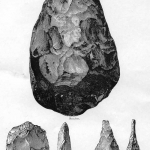
Experimental archaeology can be employed to test hypotheses on tool function by replicating different activities with freshly made tools. The reliability of experimental archaeology as an information source for use-wear analysis has been tested through multiple blind tests. These tests judge the ability to identify tool motion and contact material. One study done at the University of California Davis found that tool action was correctly identified 84 percent of the time, while tool material was correctly identified 74 percent of the time.
Related Posts