Eric Schlosser’s new book, Command and Control, is a critical look at the history of our nuclear weapons systems—and a terrifying account of the fires, explosions, false attack alerts, and accidentally dropped bombs that plagued America’s military throughout the Cold War.
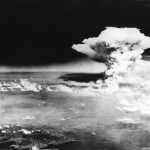
In today’s interview Schlosser tells us about the early nuclear weapons and the destruction of Hiroshima:
“Early nuclear weapons were essentially handmade. … In the case of Hiroshima, the bomb that was dropped on Hiroshima was an incredibly crude and inefficient weapon. When it exploded, about 99 percent of the uranium that was supposed to undergo this chain reaction didn’t — it just blew apart in the air. And a very small percentage, maybe 2 percent of the fissile material, actually detonated — and most of it just became other radioactive elements.
So when you look at the destruction of Hiroshima, this major city, Hiroshima was destroyed in an instant, and 80,000 people were killed and two-thirds of the buildings in this enormous metropolitan area were destroyed instantly because 7/10 of a gram of uranium 235 became pure energy. To imagine how small of an amount that is — 7/10 of a gram of uranium is about the size of a peppercorn; 7/10 of a gram weighs less than a dollar bill.
Even though this weapon was unbelievably inefficient and almost 99 percent of the uranium had nothing to do with the destruction of Hiroshima, it was a catastrophic explosion. Nuclear weapons since then have become remarkably efficient and small and capable of destruction that makes Hiroshima seem trivial.”
His interview on fresh air is incredibly sobering.